









The United States government has established August 1 as the definitive date for the implementation of new tariffs on a range of trade partners, according to Commerce Secretary Howard Lutnick.
On Sunday, Lutnick made clear that while this deadline marks the start of tariff payments, diplomatic discussions will still be possible beyond this date.
In an interview with CBS News, Lutnick stated, “That’s a hard deadline, so on August 1, the new tariff rates will come in,” referring to tariffs targeted at the European Union and other international counterparts. These tariffs, initially unveiled earlier this year, have undergone several scheduling changes amid ongoing negotiations with affected countries.
Following President Donald Trump’s announcement on April 2 introducing substantial import levies on various nations including the EU and Canada, the timeline for activation had been subject to shifts. However, White House officials have now emphasised that August 1 remains an immovable commencement date for the tariff regime.
“These tariffs are intended to level the playing field and prompt fairer trade practices,” Lutnick explained. Nevertheless, he emphasised that talks would not be halted. “Nothing stops countries from talking to us after August 1, but they’re going to start paying the tariffs on August 1.”
Lutnick further elaborated on the treatment of smaller economies, indicating that countries in Latin America, the Caribbean, and Africa would face a baseline tariff rate of about 10%. This approach offers a relatively moderate tariff compared to the steeper rates applied to larger economies.
“The bigger economies will either open themselves up or they’ll pay a fair tariff to America,” he added.
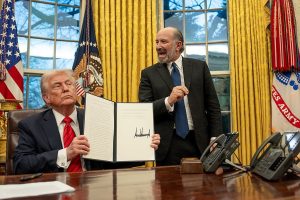
President Trump recently hinted that the baseline tariff for smaller nations might surpass 10%, indicating a more stringent stance on trade relations with these countries. Last week, he announced that formal letters detailing tariff rates would soon be dispatched to smaller trade partners.
“We’ll probably set one tariff for all of them … probably a little over 10%,” the President remarked.
The announcement of new tariffs has raised concerns among affected nations, many of which are seeking to negotiate exemptions or reduced rates before the deadline.
In a move that heightened tensions, Trump issued letters earlier this month informing trading partners of tariffs that could reach as high as 40%. Posted on the social media platform Truth Social, these letters reiterated the August 1 enforcement date and triggered a surge of last-minute diplomatic efforts.
Observers note that these tariffs, reminiscent of prior protectionist measures, could have considerable effects on global supply chains and international markets.
Analysts from the Peterson Institute for International Economics cautioned that “imposing steep tariffs risks retaliation, supply-chain disruptions, and increased costs for American consumers.”
President Trump has frequently expressed concerns about trade imbalances and the decline of manufacturing jobs, advocating tariffs as a corrective tool.
Critics argue, however, that such tariffs may provoke retaliatory measures and damage diplomatic relations, urging Washington to prioritise multilateral negotiations instead of unilateral tariffs. Nevertheless, with the August 1 deadline fast approaching, the administration appears ready to enforce these levies irrespective of ongoing discussions.