









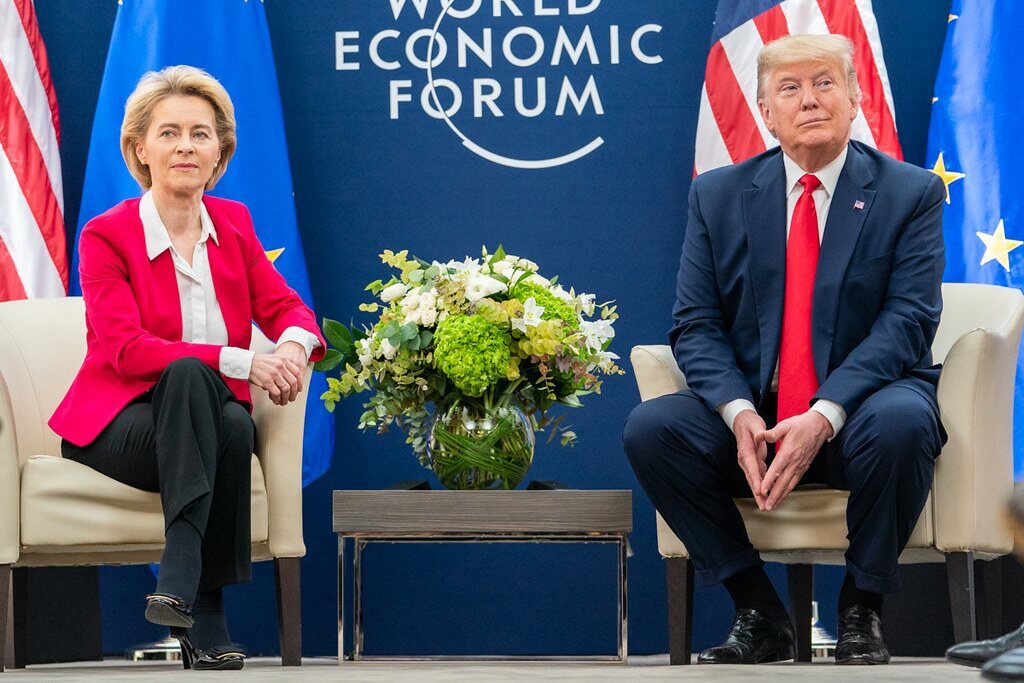
Pharmaceutical industry leaders are calling for clear guidance on tariffs under the new EU-U.S. trade agreement, amid concerns that uncertain sector-specific levies could destabilise the deal.
The agreement, announced on Sunday, imposes a 15% tariff on European goods entering the U.S., including pharmaceuticals. However, conflicting statements have caused confusion.
U.S. President Donald Trump described the tariffs as applying “across the board” to “automobiles and everything else,” yet said pharmaceuticals were “unrelated to this deal.”
In contrast, European Commission President Ursula von der Leyen said the tariff was “all-inclusive.”
“We have 15% for pharmaceuticals. Whatever the decision later on is, of the president of the U.S., how to deal with pharmaceuticals in general globally, that’s on a different sheet of paper,” she added.
Trump earlier indicated that pharmaceutical tariffs could reach as high as 200%, as his administration conducts a Section 232 investigation into the impact of pharma imports on U.S. national security, with a decision expected in August. This raises fears that duties could rise beyond the current 15% ceiling.
Pharmaceutical exports represent the EU’s largest shipments to the U.S., valued at about $120 billion in 2024. Analysts warn that even a 15% tariff could increase costs by up to $19 billion a year, potentially raising drug prices and disrupting supply chains.
“The questions around pharma tariffs are highly material, given the volume of imports from the EU,” Wolfe Research noted.
Meanwhile, Eurasia Group cautioned that “any surprise increases to the 15% ceiling on pharma tariffs would threaten the broader trade truce.”
Pharmaceutical companies remain uncertain. Philips CEO Roy Jakobs said, “We’ve been asking for exemptions from [tariffs] in the US, in the EU, but also in China. That’s something we have been pleading for.”
“In the current deal that has been announced, that was not part of it, so we keep having that dialogue.”
With the investigation ongoing, clarity on pharmaceutical tariffs is crucial to safeguard the fragile trade relationship and ensure continued access to vital medicines. Both sides now face pressure to resolve these uncertainties before the agreement’s future is jeopardised.