









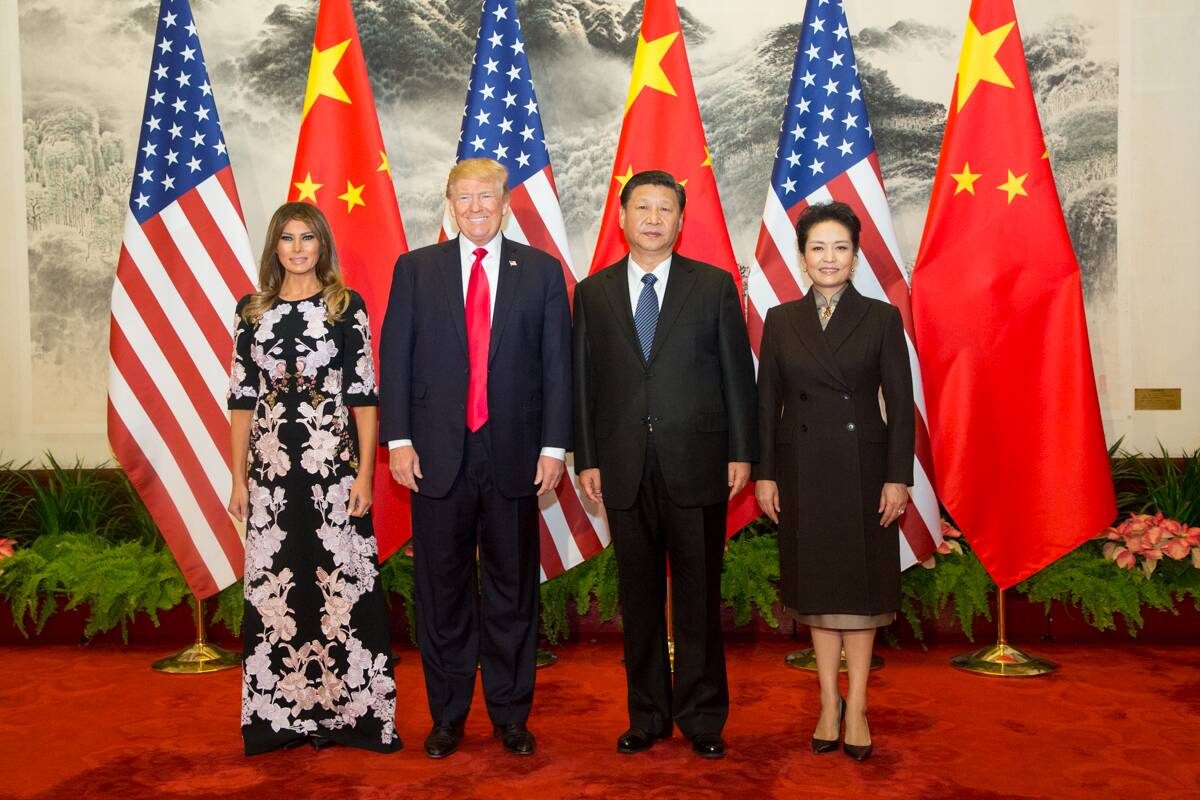
President Donald Trump has announced a further extension of the current pause on elevated tariffs imposed on Chinese imports, delaying the reinstatement of these higher duties by an additional 90 days until mid-November 2025.
This decision came just hours before the original deadline was due to expire, thereby maintaining U.S. tariffs on Chinese goods at a reduced rate of 30%, while China continues to apply a 10% tariff on American products.
The extension follows the latest round of trade negotiations held in Stockholm at the end of July, reflecting a mutual interest in continuing the ongoing tariff truce initially agreed upon in May amid escalating trade tensions.
Earlier in the year, tariffs on Chinese imports had surged to unprecedented levels, severely straining bilateral trade relations. In April, the United States raised cumulative tariffs on certain Chinese goods to as much as 145%, prompting China to respond with retaliatory tariffs reaching 125% on U.S. products. However, the May agreement led to a partial rollback, reducing tariffs significantly and offering temporary relief to industries affected by the trade conflict.
This latest extension exemplifies the erratic nature of U.S. trade policy under Trump’s administration, which has often shifted with little advance notice, generating uncertainty among businesses engaged in international commerce. Previous tariff measures, such as the “reciprocal tariffs” introduced in early April, were paused, modified, and delayed multiple times before being implemented in a revised form just last week.

In a related development, Trump has publicly urged China to “quickly quadruple” its purchase of American soybeans, a plea intended to help reduce the U.S. trade deficit with China. This appeal was made via his Truth Social platform and was followed by a rise in soybean prices on the Chicago markets. Nevertheless, it remains unclear whether China has formally agreed to increase its soybean imports in response.
The extension of the tariff pause provides a temporary reprieve amid a complex and evolving trade dispute, allowing additional time for negotiations that could potentially lead to agreements between the two nations.
Discussions are reportedly ongoing regarding key issues such as technology exports, including semiconductors vital for artificial intelligence development, and cooperation in sectors like energy and rare earth materials.
The potential for a summit between Presidents Trump and Xi Jinping later this year, possibly coinciding with the Asia-Pacific Economic Cooperation (APEC) meeting in October, shows the continued diplomatic engagement in the midst of economic rivalry.
Trade volumes have been affected by the protracted tariff dispute, with reported declines in both Chinese imports to the U.S. and U.S. exports to China. Nevertheless, businesses and markets have welcomed the tariff extension as it introduces a degree of stability and reduces the risk of abrupt cost increases for manufacturers and consumers.
Meanwhile, the United States is pursuing concurrent trade discussions and agreements with other partners including Japan, South Korea, and the European Union, while adjusting tariffs selectively in response to geopolitical concerns such as Russia’s oil exports and related supply chain issues involving India.