









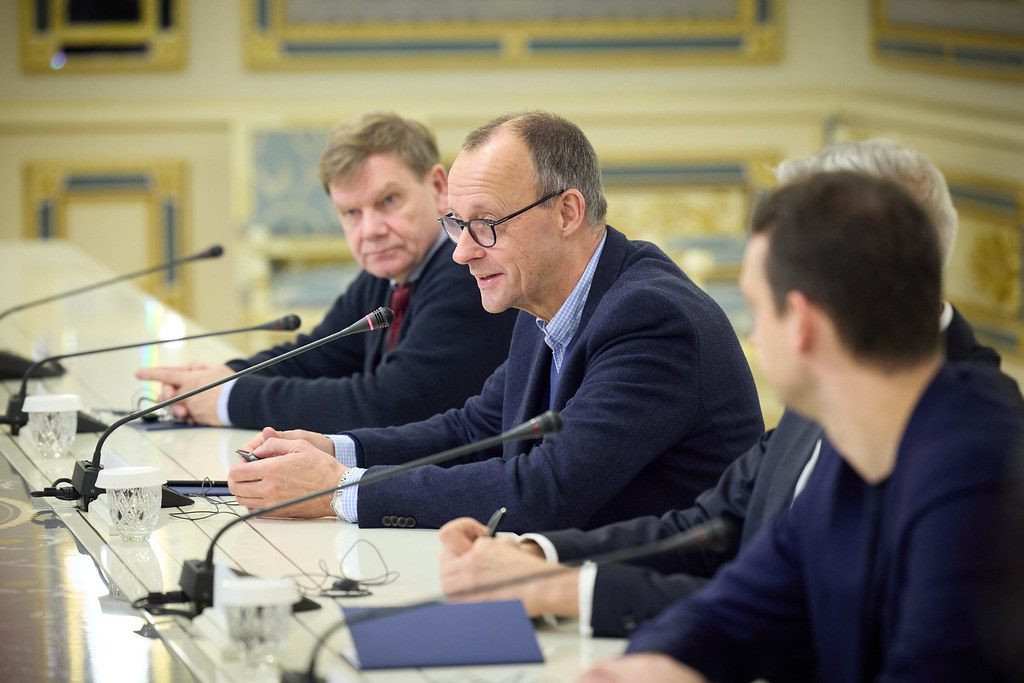
Since Friedrich Merz took office as Germany’s Chancellor just over 100 days ago, the business community has pressed the government to transform its promises into real progress. Initial optimism, boosted by Merz’s pro-growth agenda and a coalition fiscal shift allowing increased spending on defence and infrastructure, now faces demands for swift action.
Merz’s coalition of the CDU, CSU, and SPD has relaxed budget constraints that previously limited public investment. Businesses welcome this change after many years of underinvestment.
“We have, as you heard before, a minimum of 10, maybe 20, years of weak political decisions, very ideologically driven, not business driven, not society driven, and it seems to be that the new government is going in a different direction,” said Thomas Schulz, CEO of Bilfinger.
Allianz CEO Oliver Bäte also praised the seriousness of the government’s efforts. “I can only applaud them for taking it seriously, to also mobilize financial reserves to put an unheard of investment program into place, and also end almost two decades of lethargy of under investment in infrastructure, under investment in military, defense [and] under investment in education,” Bäte stated.
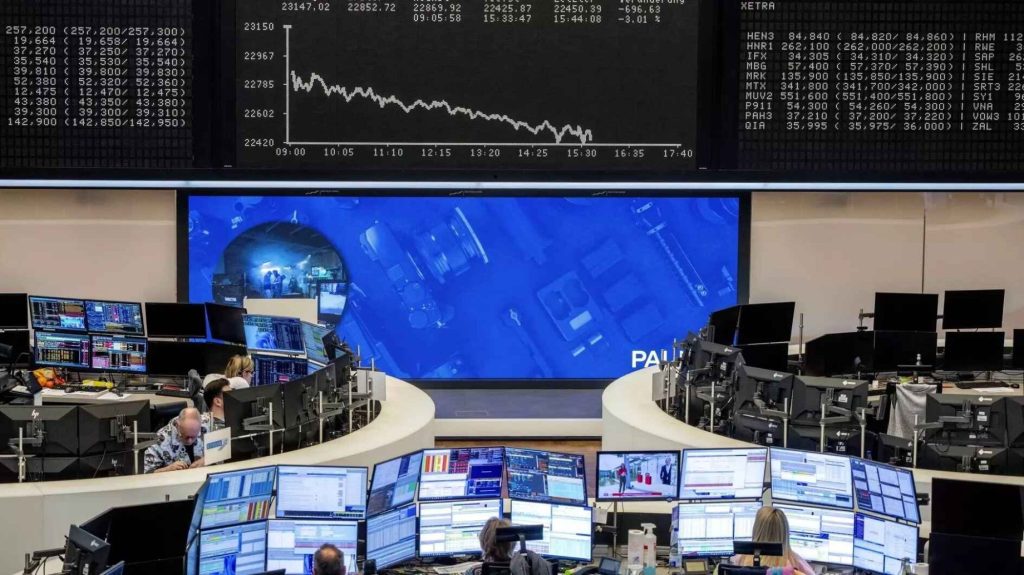
In July, 61 major firms pledged to invest collectively €631 billion by 2028, indicating renewed collaboration between politics and business. Deutsche Telekom CEO Timotheus Höttges said, “This is a good signal, and it shows that there is an alliance between [the] corporate world and the politics these days, which is very important, which hasn’t been the case over the last years.”
Despite improving business sentiment reported by the Ifo Institute, companies demand that the government move from words to deeds.
A survey published by Frankfurter Allgemeine Zeitung showed that 30% of economists view the government’s early economic policies as “rather negative,” with 12% rating them “very negative,” citing insufficient reform in social security, bureaucracy, and climate protection.
Siemens CEO Roland Busch called for urgent structural reforms such as “digitalization, faster decision processes, less bureaucracy, working [on] our energy transformation,” alongside labour market changes. Höttges added that government support is vital for expanding fibre-optic infrastructure.
Germany’s economy has struggled recently, contracting in 2023 and 2024, followed by weak growth this year. As the nation strives to restore its position as Europe’s economic leader, decisive government action alongside private sector investment will be crucial to overcoming longstanding challenges.