









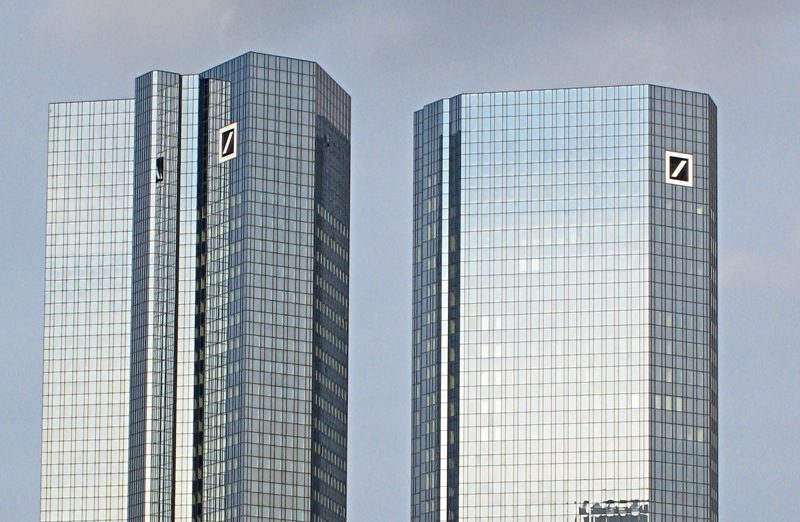
Deutsche Bank’s shares rose nearly 6% on Thursday after the bank reported second-quarter profits that exceeded market expectations, reinforcing its confidence in meeting full-year targets despite mixed results in investment banking and the euro’s strength against the U.S. dollar.
For the quarter ending June 2025, Deutsche Bank posted a net profit attributable to shareholders of €1.485 billion, well above the consensus estimate of €1.2 billion, reversing a €143 million loss in the same period of 2024, which was impacted by legal costs tied to its Postbank acquisition.
Revenues reached €7.804 billion, close to analyst forecasts. CFO James von Moltke highlighted encouraging momentum alongside disciplined cost control.
“The setup in terms of momentum, discipline around costs, momentum in the businesses, looks to us very encouraging, and therefore we’re confident that we’re on track to achieve our targets,” he stated.
However, the euro’s appreciation against the dollar was a major headwind, described as the “big thing that’s kind of flowing through our numbers.”
The core investment banking division saw a 3% rise in revenue to €2.7 billion. Fixed income and currencies revenue jumped 11%, amid greater financing income and foreign exchange activity, while the origination and advisory unit fell 29% to €416 million due to “market uncertainty” and postponed deals.
Corporate banking revenues dipped 1% to €1.896 billion, with von Moltke noting “a bit of a chill” in activity and sluggish loan growth partly affected by currency translation.
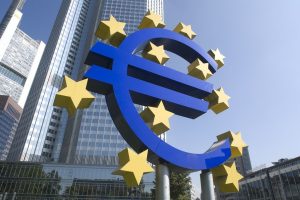
European banks continue to face a low interest rate environment, with the European Central Bank holding its key rate at 2%. Yet increased defence spending in Germany and Europe has created fresh opportunities.
CEO Christian Sewing said, “We have clearly, in particular on the European side, been underinvesting,” signalling a stepped-up focus on defence ventures.
The German political landscape has stabilised after snap elections gave Chancellor Friedrich Merz’s coalition power, which von Moltke linked to improved investor and client confidence.
Nonetheless, Germany’s outlook is clouded by trade uncertainties as the EU seeks to finalise a tariff deal with the U.S. by August 1. Bundesbank President Joachim Nagel warned that “If tariffs materialise in August, a recession in Germany in 2025 cannot be ruled out.”
Von Moltke agreed that tariffs could bring a “relatively steep” increase in currency translation headwinds and create challenges for exporters, though impacts will vary by sector.